Categories
Change Decisionmaking Followership Leadership Mentor Motivation Training

On DISRUPTION by David Guerra

Blog entry Dave Guerra on Disruption


Recently, I had a run in with DISRUPTION.

I know that’s nothing new. We all have to run into disruption (at least once or twice a day), it is part of who we are. Disruption is part of life. Without disruption how could we ever differentiate between what is urgent, what is important, what is not urgent and what is not important. We need disruption to give us perspective when we need and when we don’t.

Defining Disruption

I see Disruption as to go away from the norm. To move away from what is the everyday, the understood, the expected, basically move away in any and all angles of approach & departure. Does that make sense? If not, please let me clarify. Think of disruption as a succession of four way stops and no matter which turn you take (if any) it will take you to your final destination.

Positive Disruption

Yes, disruption always has a certain degree of positivity. Of course, the amount of positive disruption varies as each situation is unique. What I mean is when disruption occurs you are not define by the action of the disruption but by what you do after. How you approach and handle the disruption will determine the amount of positivity the disruption gives you.

Isn’t Disruption supposed to be something we dread or fear?
Yes and no. Yes, in that once you get into your groove and things are moving along at a constant suitable space why would it be good to disturb or disrupt? It is not. It means that it is now time to slow down and then gradually get back up to speed. Disruption should not be dreaded or feared in that it should be expected. When you expect something to happen you have a mindset of anticipation. Anticipation in that you know how you will react to the disruption and that’s a good thing. There will be times that others will, in response to disruption, get cold feet for fear of doing the wrong thing will react negatively or not at all and that’s not a good thing.

Disruption is necessary?

Most certainly, disruption is necessary. It is necessary when it creates a challenge and that creates or leads to change. Change, whether good or bad is still change and change is part of growth. Whether the outcome is not what is desired, it does give you the opportunity to turn things around move away from what you have known or just learned (the bad outcome) and into the unknown based on you have already left the bad behind. You could almost call disruption a checkpoint on the road to success.

Is disruption not a good strategy?

Any strategy or tactic should include anticipated and expected disruption. The need to deal with disruption as part of the plan is critical to the success of the plan. Did you know, in training Infantrymen, the US Army teaches how to deal with and fight through an ambush. Trust me, when I tell you an ambush (deliberate or hasty) is a disruption no Infantryman wants but does expect because they have been trained, since basic training on how to deal with it. It is when you ignore the fact that disruption (at any level or intensity) will occur that you have given up. That’s right you have given up long before you can implement any strategy or tactic.

How can disruption change the routine or status quo thinking/mindset?

It all depends on what the benefit or perceived benefit is for the individual(s) affected by the disruption. Disruption is a good thing so long as there is something positive for those affected by the disruption people will conform or at least, adapt. For example, there was a needed I needed extra help in a projected and asked for volunteers. As anyone who has ever worked for other people knows never to volunteer for anything. That’s OK, it was the first rule I learned when I joined the Army. So I understood that no one was going to outright volunteer for anything. I asked one more time and the new guy (in the organization) stepped up and volunteered. I told him to go home, he got a paid day off. Everyone else was “volunteered”. Needless to say, the next time I asked for a volunteer, everyone raised their hand.

I first learned about this tactic to getting people to volunteer especially when no one wants to volunteer when I was in the Army. Though I was not the one who was given the day off, I did promise myself that if I am ever in a situation where getting people to volunteer is difficult, I would try the tactic I mentioned. I remembered this disruptive idea from so many years ago for the same reason people remember things that appeal to them because it creates change in the way they do business or live or learn for better or worse.

What about the naysayers?

Getting naysayers to buy into your disruptive idea(s) is always going to be an up hill climb or swimming up the creek without a paddler or (insert cheese cliche about struggle here). But, the best way to win over the naysayers is to show them and not just tell them how the idea(s), the disruptive idea or concept, will be good for them. Do not gloss over the idea but be specific. Do what you need to do to connect at a personal level and you got it

Remember, to be disruptive, one must be willing to dare to be Disruptive! You have no choice, if you want to succeed when disruption comes to town, either through your hand or at the hands of others you must disruptive. Yet, be positively disruptive. To be positively disruptive you must POSITIVELY BE DISRUPTIVE!


Thank you
David Guerra
Save

Save

Save

Categories
About Me blog DareToBe Decisionmaking Followership Inspiration Leadership Mentor Motivation Walking Leader Writing

Be Strong. Be Fearless. Be Wise.

0901-NOONER

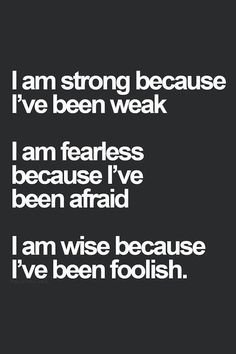
I am strong because I have been weak.
I am fearless because I have been afraid.
I am wise because I have been foolish.

Can you say those words? Can you make that affirmation or will it make you feel weak, afraid, and foolish in front of others?

There is nothing wrong with looking like a fool or being afraid or appearing weak? Yet, too many people would rather live a mediocre life because they are afraid of walking out on the ice. Not knowing how thick or thin, it is. Are you afraid of looking like a fool when you speak to a crowd but nobody hears? Scared of being perceived as weak because your hopes and dreams are not the same as anyone else? Well, you are not alone, come in from the fear.

Too many times, we don’t do what we believe we should do because of what will the neighbors think.
To put it bluntly; screw what others think or believe.

They are not the dream of dreams and most certainly, they are no prize. Though they might believe they are but we know better. They are just regular everyday people who have their own problems, shame, guilt, and most of all, their own shortcomings. Just like you and I do. They might not show it because they are working at creating a façade that looks pretty but serves no true purpose. Add that to their feeble attempts to try dictating the conversation or manipulating the impressions of others. In the end, what does that get you? Nothing!
I know what it is like to be laughed at. I know what it is to be called a coward. I also know exactly what it is to be called a joke. Whether they want to read it or not or admit it or not, I have been called a coward, a joke, and laughed at by, believe it or not, those who I needed the most.

Does that stop me from needing them? No, it does not, as a matter of fact, I need them now more than ever. However, it does stop me from returning to them like a moth to a flame. Once you can break the cycle of returning to the place where you are burned then can you start to grow, change and become better. Nevertheless, for as long as you wallow in that misery and enjoy being burned you become more and more entrenched in that misery.

Remember, I know you are better than that. You can make that change. Admit your shortcomings and start to work on them. Then and only then can you be better than you were yesterday.

On the positive side, I have been called a hero, a wise man, and have had people laugh with me. it is a great feeling knowing that you are respected for what you are and not for what others want you to be or where they would rather keep you, typically beneath them.

That is, unfortunately, more than others can say about themselves.

Be Strong. Be Fearless. Be Wise. Be Better Than You Were Yesterday!

xxx

Categories
blog Decisionmaking Followership Leadership Leadership in Motion Pictures Walking Leader

Leadership In Motion Pictures #1: “Twelve O’Clock High” by David Guerra

I have been toying with this subject for quite some time and so enough is enough, I introduce you to

“Leadership in Motion Pictures”

The purpose of Leadership in Motion Pictures is simple; to present and show you those unique motion pictures that not only entertain but show leaders in unique situations and how they get themselves out of it.

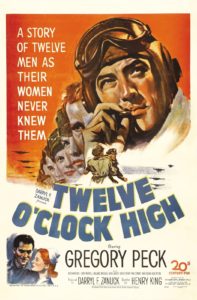
Twelve O'Clock High with Gregory PeckThe first motion picture is the 1949 classic TWELVE O’CLOCK HIGH starring Gregory Peck as a US Army Air Corp Brigadier General reluctantly is given command of a bomber group based in England during World War II.

When the movie begins the 918th Bomb Group has suffered terrible losses and the commander seems to do nothing to get the bomber groups confidence back. When all seems lost, the upper echelon wants change and that change has to happen now. The war cannot wait for the current commander to get his “mojo” back.

In comes the reluctant Brigadier General Frank Savage played by Gregory Peck. He starts by restoring law and order in an otherwise near chaotic and malaise infested Bomb Group. Savage starts by doing what he must do to restore order on the ground before even considering any changes in the air.

There is resistance to the changes. No one likes his “back to fundamentals approach”. Sound familiar? However, with threats from the pilots and crew of quitting or transferring, the General does not back down. Ultimately, the changes start to make sense for the 918th Bomber group and they start to gel. The pilots, crew, and men of the Bomb Group start to regain their confidence.

While on actual bombing missions, Brigadier General Frank Savage is up there with the group. He is leading them from the front on numerous missions. Then he begins rotating flight commanders among all the pilots in his command.

Throughout the motion picture permeates the sense of battle fatigue, combat stress, post traumatic disorder, and just plain old “bad luck” as to why things are happening the way they are.

War is never easy. When motion pictures stopped glamorizing war (such as those John Wayne type movies) then things could really be told. I understand some liberties have to be take to dumb down war, men in war and the things that happen in war for the general public to consume but the message of leadership also permeates throughout Twelve O’Clock High.

The message is simple. The mission comes first. In this case, the mission is to win the war. The men come second. Use the men as best as they can be used to support the mission which will win the war. The mission, the men and women that perform the mission and the price the men, women and their machines pay to fight in a war is one thing that every leader must remember whether fighting a war in some far off land or the battle is in the accounting department. The mission is and always will be of the most highest importance by their leader or leaders. Get everyone focused on the mission. Hold them accountable to that mission and the rest will take care of itself just like General Frank Savage did in Twelve O’Clock High.

Twelve O’Clock High is currently available for streaming on NETFLIX and on AMAZON dot com.

Save

Save

Save

Save

Save

Save